
A Collaboration You Can Bet On
Marshall Ogier, S2’s Director of Economic Development and Workforce Systems, reflects on his experience as a 2026 Big Bets fellow.
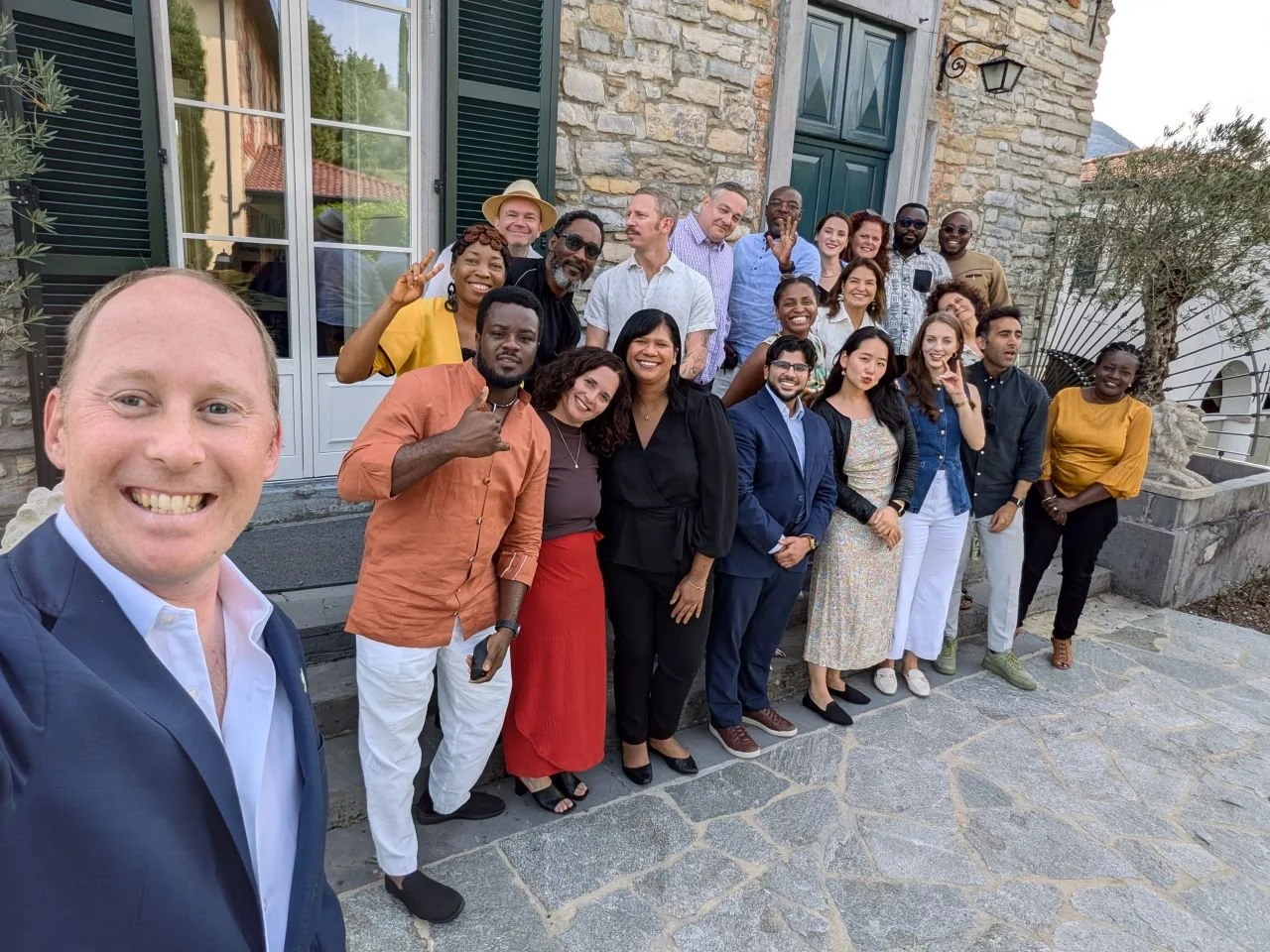
2026 Big Bets Fellowship awardees
What is the Big Bets Fellowship?
The Big Bets Fellowship is a leadership development program by the Rockefeller Foundation that is kind of like what it sounds. It's to come up with a “big bet” or a big idea, something that's society-changing, that is maybe beyond normal reach, that you want to accomplish or that you think could be beneficial to your community, and the nation, and the world.
Through the fellowship, they give technical assistance in storytelling and systems change to help move the fellows towards that goal. There are currently 10 different fellows around the United States, and most of them are working in the workforce space in one way or another.
Can you tell me a little bit more about your, or our, big bet–the one that's focused in Memphis?
The big bet that I submitted for the fellowship and was selected for was to create a more interconnected workforce ecosystem.
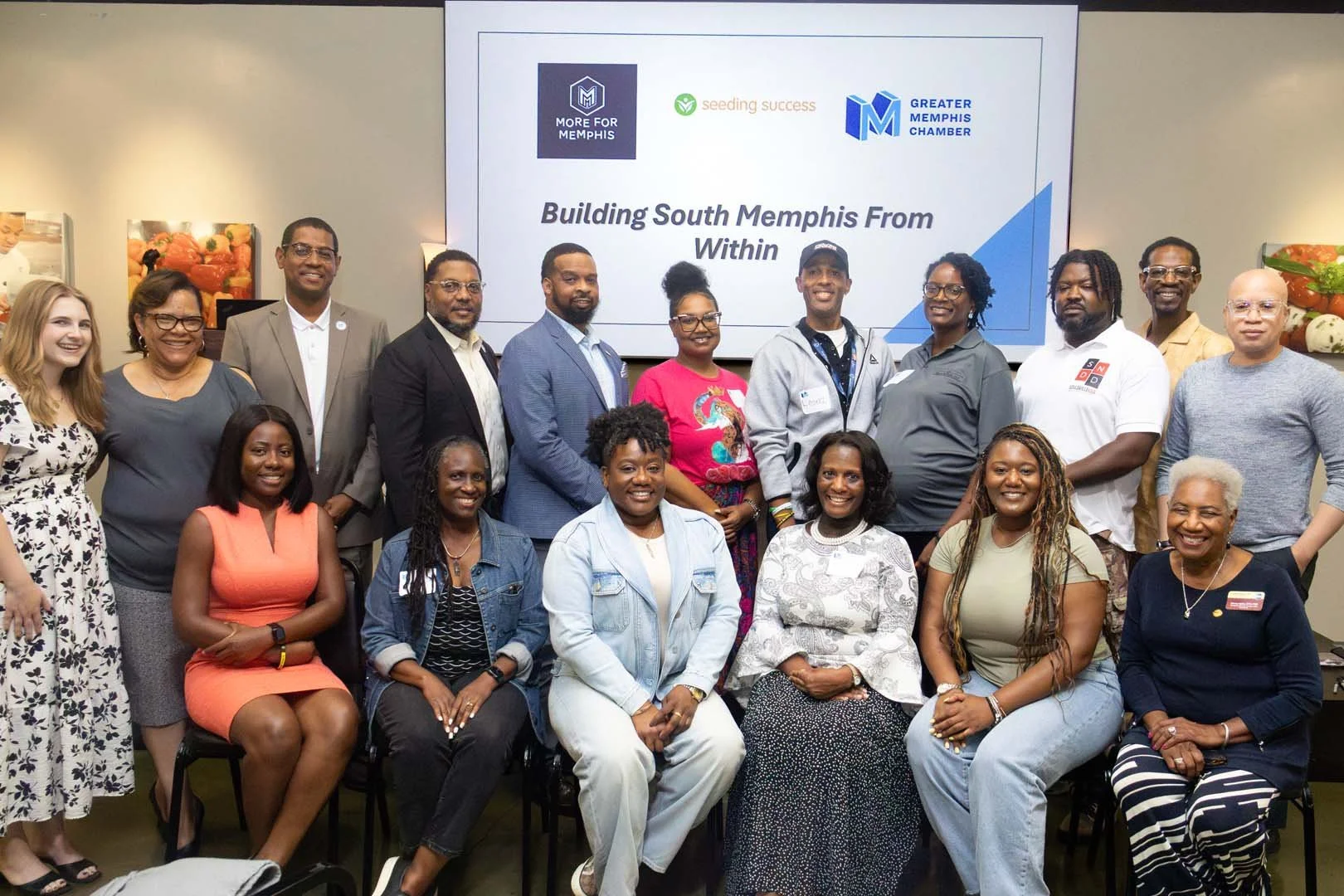
In Memphis, we have lots of actors in the workforce space. We have our higher ed institutions. We have the workforce board. We've got the Chamber. We've got individual training providers like Tech901 or CodeCrew. We've got people trying to get through those training programs and get into jobs. We have employers. And then on top of that, we also have wraparound supports, folks that are providing counseling or transportation assistance or housing assistance, and it all just lives out there in silos by itself. Maybe a couple pockets of folks [are] working together, like with the Memphis Medical District Collaborative, but the overall ecosystem is not super connected, so the big bet that I proposed was creating a cohesive ecosystem that works together through the use of technology.
We've been working on that through the RiseKit platform and getting folks connected to it so that an individual who wants to find a living-wage job is able to see what training programs are available, what jobs those lead to, what financial assistance is available, what other wraparound supports are available–all so they can see that, get to the jobs that they want, and can support themselves, their families, and their communities.
What was the application process like?
It was a multi-stage process. I found out about it maybe at the end of last year, like December, just through some of my national partners that we work with.
Initially, I came up with this idea based [on] the work we've been doing with More for Memphis–like an elevated level of it. I think [about] 2,500 people applied. Twenty of us were finalists that were interviewed and went through an additional vetting process through industry experts. From there, I just worked with our team, with Matt and Jamilica and Mark, about some details that I had fleshed out a little bit in the application process, but needed their guidance on.
Then, I interviewed with Rockefeller, and there was a month-long review process [...] with some industry experts. Ten fellows were selected across the US, and from that, they selected a couple people that were doing place-based work like we are doing in Memphis. For example, Serena Jezior is working with the workforce board in Cleveland.
There are also fellows working at the national level to help colleges, workforce organizations, and communities strengthen their programs and strategies. People like Rohan Sandhu at Harvard Kennedy School, Rachel Halfaker at the Milken Institute, and Shalin Jyotishi at New America are bringing research, expertise, and technical support to organizations trying to improve education and workforce systems.
And then there were some other folks working in more of an investment and infrastructure space [...] Everybody was additive to the other folks' work, so we were able to lean on each other, and learn from each other, and then also plan for future engagements with each other's work.
“Nobody has a silver bullet to solve the problem.”
What excited you most about the fellowship?
I’m always thinking of absurd ideas of ways that we could help change the work. And I think a lot of the time when we're doing this systems change work, it can seem very incremental and very slow.
Sometimes I compare it to [...] guiding glaciers. We can't just completely make huge shifts in the system. We're slowly moving things along, and this was an opportunity to take a big swing. How can we take what we usually do and [...] if not accomplish it, look at what it would look like for this whole system to be changed overnight? How can we get all of the partners and stakeholders in Memphis working together? And this seemed like a good opportunity to help facilitate some of that. At the end of the day, it was just exciting to be able to hopefully achieve some of this and create the systems that actually work for the community, because the community is just really disserved through the current system.
We have persistent outcomes in Memphis that are lower than the rest of the state and the country, and there are specific neighborhoods in Memphis that are underperforming other neighborhoods historically, generationally. We need big ideas if we're gonna change those outcomes.
What are your main takeaways from participating in this fellowship?
On a high level, one of the big takeaways is–and this has happened a few times on national work we've done–a lot of folks around the country are dealing with similar problems or issues, even if the work is significantly different. There are communication issues; there are coordination issues; there are trust issues. And that's not a Memphis thing, even if sometimes we're like, “Oh, this chaotic thing's happening in Memphis.” And it's like, no, this is not a Memphis thing. This is happening everywhere.
There was also a lot of affirmation through the process. A big part of the training asked, “How do you do systems change?” A lot of the other fellows don't necessarily do systems change as their work, and [for Seeding Success], our work is systems change. So there was a lot of stuff that was like, "You should be doing this, and you should be doing this. You should be convening partners, and you should be using continuous improvement, and you should be looking at the data.” We're doing all these things, so that part was reaffirming, which was great.
Then I think, big picture, there are a ton of resources and smart people everywhere, both locally and nationally, that are working on these things. If we can align them and harness the group intelligence that everybody has, I think there's a really big potential to either bring people in or lift people up to create solutions that work for folks.
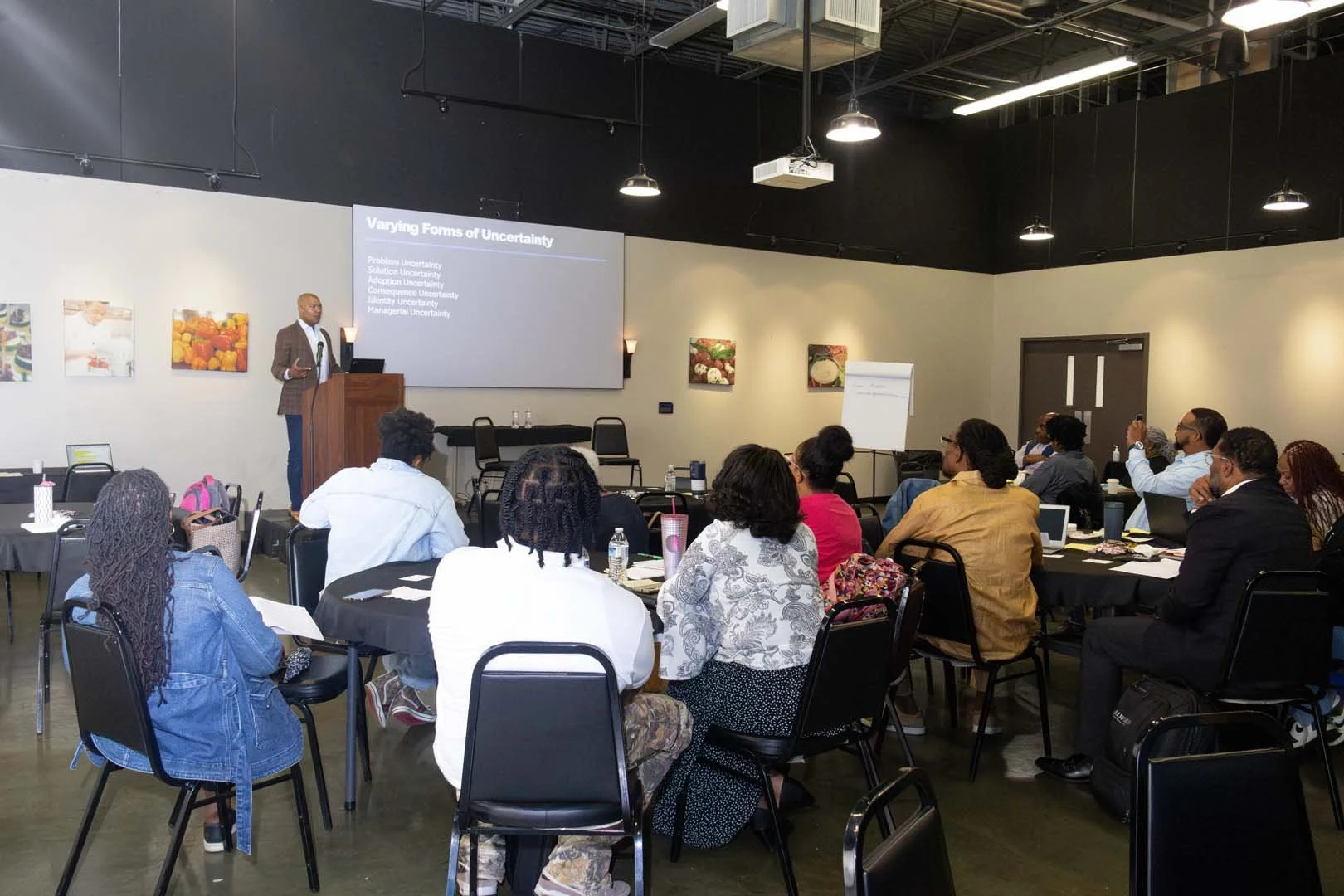
What did you learn that can specifically inform our work in Memphis?
Some of the biggest learnings were just around the storytelling process. What is the story that we're trying to tell? How do we accomplish the work that we're doing through a story that people understand?
I think a lot of times when we're doing systems change work, it's like, “What does that even mean?” And there was a lot of the fellowship that focused on storytelling and putting what we're doing into words that people understand. [...] So I think it was helpful just to go through the process with a group of other folks that were dealing with complex issues and being like, "Okay, how do we translate this into a way that people want to hear it," so that people do hear it.
What was your favorite part of participating in the fellowship?
My favorite part really was connecting with the other fellows and seeing the work folks are doing around the country. They are a group of people who are really passionate about making the world better. It was cool to hang out with them for five months, and then the icing on the cake, which was great, and I would be lying if I didn't mention it, was getting to hang out in Bellagio, Italy for a week at the Rockefeller Foundation's villa.
One, it was just a really cool place to be, but two, just to be around those people as well as 10 fellows from Africa who are doing a similar fellowship, a Big Bets fellowship, focused around mostly [things like] green energy and climate change. And it was really great to interact with those folks as well.
Overall the people, I think, were the best part.
Is there anything else that you can share about your fellow cohort members?
There are some specific folks that I want to bring into the Memphis space to help support some of the work we're doing and do some learning from that. The person at New America, Shalin, he's doing work with community colleges across the country on improving best practices. There's also another one of the fellows at the Harvard Kennedy School, Rohan, who's doing systems change workforce work–like best practices, connecting the system, and connecting research to practice.
Another one of the fellows, Chid Liberty, owns a company called Apprentos that works on apprenticeship. And I think a big part of that is removing the friction in apprenticeships so that employers can access these federal resources more easily without having to go through all the bureaucracy. I'm hoping that we can connect his work to our apprenticeship work locally to help support employers and get more apprenticeships to Memphis because I think it's a great pathway to good jobs. And there's been a really big push for it statewide and nationally.
Really at the end of the day, I think all the fellows are doing great work. What I told them at our closing ceremony at the end of the fellowship was, "I need all of you to come to Memphis and bring your work."
And whatever it is, whether it's infrastructure investments, whether it's capital assets, whether it's the other things that I mentioned, they all have knowledge that I think Memphis would benefit from, and Memphis has knowledge we can share to better improve their work. I just want to facilitate that as much as possible.
What else about the experience would you like people to know?
There are a lot of people all over the world that are working on these complex issues, and sometimes I feel like people like to put forward that there are simple issues and simple solutions. But really they're very complicated and very complex, and nobody has a silver bullet to solve the problem. That being said, I think there are a lot of people locally and statewide and nationally, like the other fellows and even a lot of our partners, that are working on the solutions to these complicated and complex issues. I am excited to just be a part of that, and I hope that more people in our community and statewide and nationally will be a part of that as well.